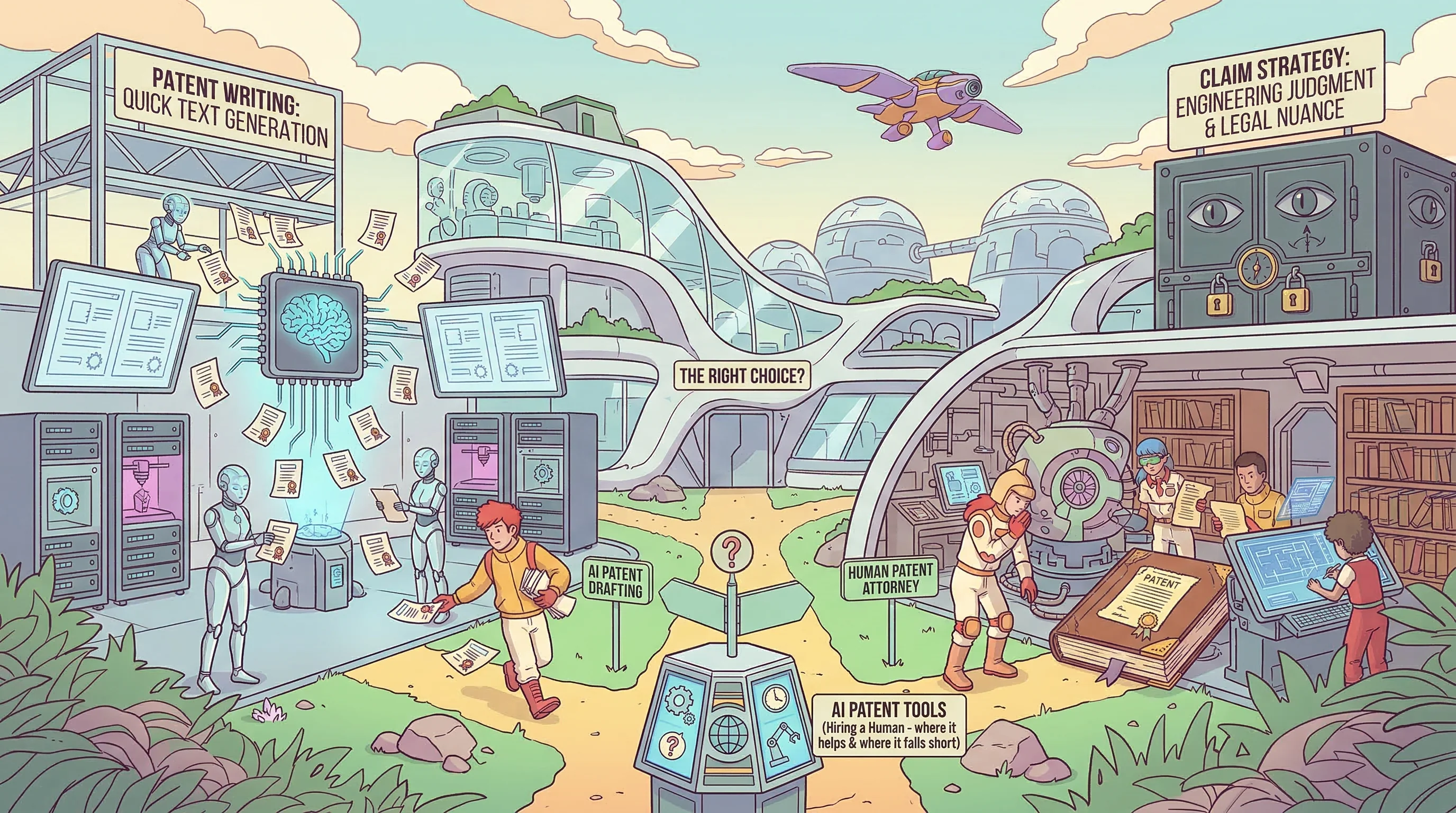
AI patent tools like PatentPal and Specifio cost $100 to $500 per draft. A human patent attorney charges $2,000 to $15,000+ for the same work. The cost difference is real, but so is the quality gap: AI-generated patents have thinner specifications and weaker claims that limit your options during examination.
Patent quality is not about generating text that sounds right. It is about covering the right structural features in the claims, anticipating how competitors will design around your invention, and building a specification that holds up when an examiner pushes back.
At a Glance
| AI Patent Tools | Human Professional | |
|---|---|---|
| How it works | Generates text from prompts and descriptions | Reviews your invention personally |
| Technical understanding | Pattern-matches against existing patent language | Understands how components interact |
| Claim strategy | Generates syntactically correct claims | Calibrates broad/narrow claims to prior art |
| Cost | $100 - $500 per generated draft | $2,000 - $15,000+ (varies by provider) |
| Speed | Minutes to generate a draft | 2-4 weeks to patent pending |
| Specification depth | Generic language, limited structural detail | Component-level descriptions |
| Office action preparedness | Thin specifications limit response options | Detailed specification provides amendment material |
What AI Tools Do Well
AI patent drafting tools generate boilerplate specification language quickly. They can produce a first draft faster than any human. For inventors who want to see what a patent application looks like before hiring a professional, they provide a useful preview of the format and structure.
Tools like PatentPal and Specifio are getting better at producing readable patent prose. They handle the repetitive, formulaic parts of a specification competently. If you need a starting point or want to understand the anatomy of a patent application before investing in professional drafting, an AI-generated draft can serve that purpose.
The technology will keep improving. AI tools will handle more of the specification writing process over time, particularly for software and business method patents where the language patterns are more standardized.
Where AI Falls Short
AI generates text based on patterns in existing patents. It does not understand how your invention works at the component level. It cannot look at your prototype and identify which structural relationship is the novel one. It does not anticipate how a competitor might change one feature while keeping the core mechanism.
These are judgment calls that require understanding the actual mechanics, not the language of patents. A good patent professional describes how parts connect, how forces transfer, how mechanisms operate. That description needs to be precise enough that a reader can distinguish your invention from every similar product that already exists.
AI tools produce text that reads like a patent. But reading like a patent and functioning as a patent are different things. A specification that uses all the right legal phrases but fails to capture the specific structural features that make your invention novel will not protect you when a competitor copies your product with minor modifications.
86% of patent applications receive at least one office action from the USPTO. When that happens, the material in your specification is all you have to work with. You cannot add new information after filing. An AI-generated specification that lacks structural depth gives you fewer options during what is often the most critical phase of the patent process. See our guide on broad vs. narrow claims for why specification depth matters.
The Claim Strategy Problem
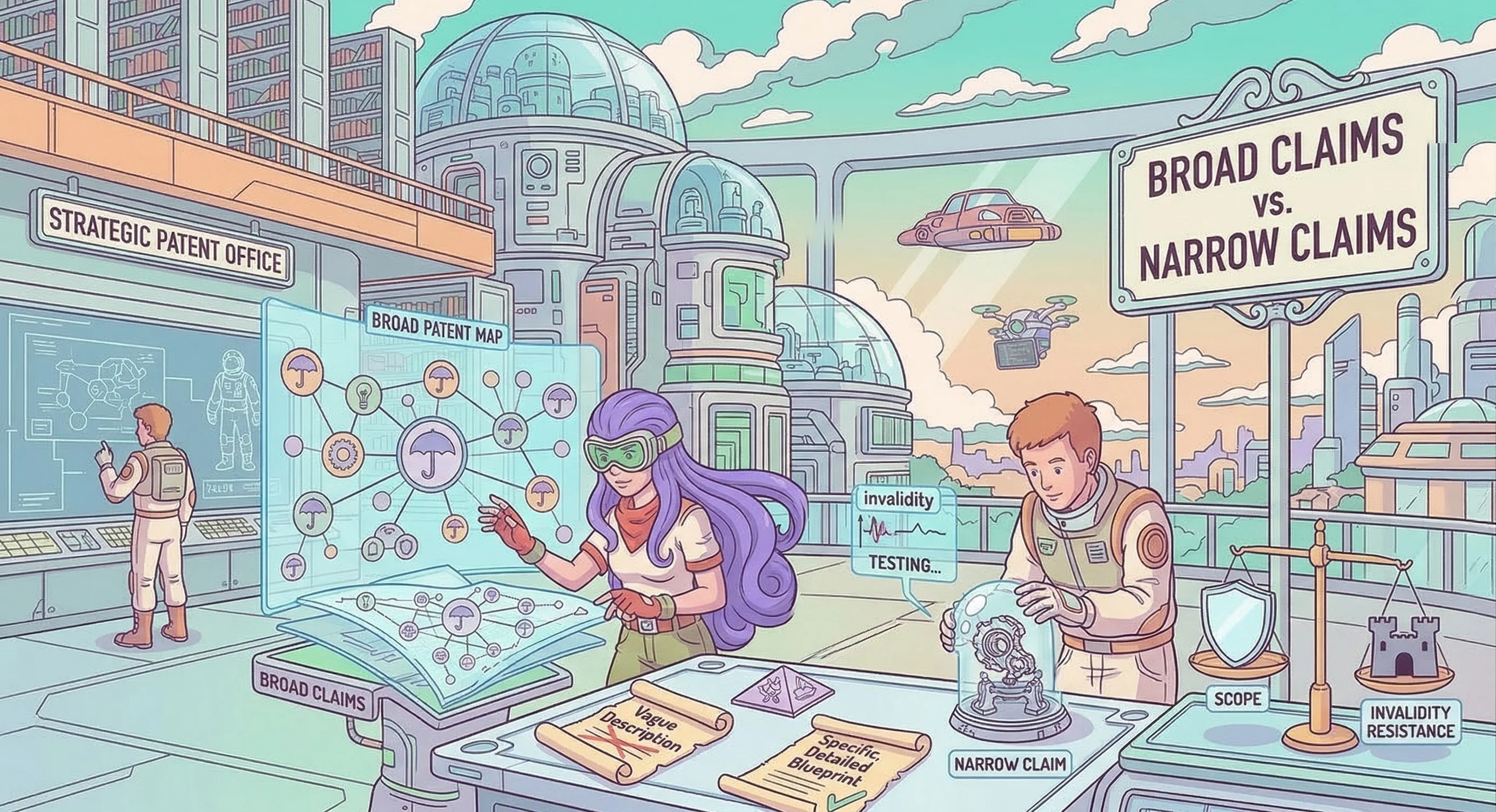
Writing claims is the hardest part of patent drafting. Broad claims cover more territory but are harder to defend. Narrow claims are more defensible but cover less. The right strategy requires understanding what prior art exists, the invention’s structural novelty, and how competitors are likely to respond.
AI tools generate claims that are syntactically correct but strategically weak. They do not know which features to emphasize and which to leave generic. They cannot assess whether a claim is broad enough to prevent design-arounds but narrow enough to survive examination against the prior art.
That calibration is the difference between a patent that reads well and a patent that works well.
When AI Tools Can Work
AI tools may make sense if you:
- Want a quick preview of what your application might look like
- Have significant patent experience yourself and can review and fix the output
- Your invention is in a well-established category with clear prior art boundaries
- Are filing a provisional purely to establish a date and plan to have a professional handle the non-provisional
When to Hire a Human
A human patent professional is the better choice if you:
- Have an invention with mechanical or structural complexity
- Need claims that will hold up during examination
- Want someone to understand your invention before writing about it
- Are filing a non-provisional and need the application to survive an office action
- The commercial value of your invention justifies thorough protection
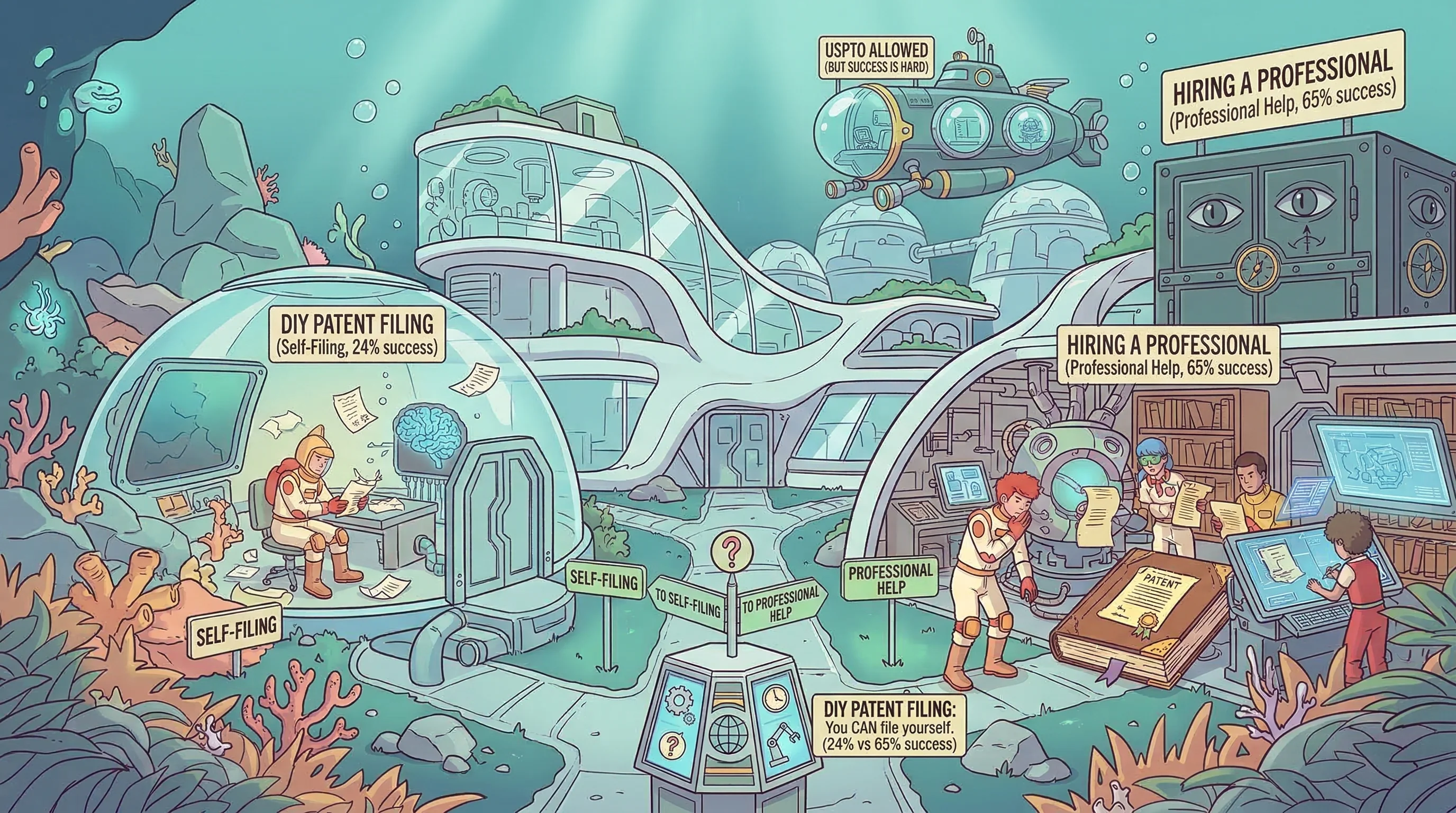
For help choosing between a patent agent and patent attorney, see our comparison guide. For a side-by-side look at filing yourself vs. hiring a professional, see DIY vs. professional filing. For cost ranges, see the patent cost guide.
Common Questions
Can I use AI to draft my patent and have a professional review it? Yes. Many patent professionals will review applications drafted by AI tools. If the AI draft is solid, they can refine the claims and strengthen the specification. If it needs substantial rework, they will let you know upfront.
Will AI replace patent professionals? For some types of filings, AI will handle more of the process over time. For physical products with mechanical complexity, the engineering judgment required to write strong claims is not something current AI tools do well. The technology is improving, but claim strategy remains a human skill for now.
How much do AI patent tools cost? Most charge $100 to $500 for a generated draft. That is significantly less than professional filing. But the comparison is between a generated text document and a filed, examined, enforceable patent application. The outputs are different products.
What is wrong with AI-generated claims? They tend to be either too broad (will be rejected for covering prior art) or too narrow (will not stop competitors from making minor changes). Good claims require understanding the invention deeply enough to draw the boundary in the right place. AI draws boundaries based on pattern matching, not engineering judgment.
Find a patent attorney in the directory or estimate costs with the patent cost calculator.