Patent attorneys charge $3,000 to $15,000+ for a utility patent, and the spread between the cheapest and most expensive attorney in the same city can be 3x. Based on pricing data from 2,999 patent professionals in the MadePatents directory, the difference between a good choice and a bad one is thousands of dollars and months of wasted time.
Choosing the right attorney is the single highest-leverage decision in the patent process. A good attorney writes strong claims that survive examination. A bad one writes claims that get rejected, requiring expensive amendments that weaken your protection. This guide covers what to look for, what to avoid, and how to compare effectively.
Technical Expertise Matters Most
Patent law is technical work. The attorney drafting your application needs to understand your invention deeply enough to describe it in claims that are both broad (covering variations a competitor might try) and specific (surviving prior art challenges).
The USPTO requires patent attorneys to have a technical degree (engineering, science, or equivalent) and pass the patent bar exam. But “technical background” varies enormously. An attorney with an electrical engineering degree and 15 years of software patent experience is a different hire than one with a chemistry degree who mostly does pharmaceutical work.
Match the attorney’s specialty to your invention:
- Software/AI inventions: Look for attorneys with computer science or EE backgrounds who understand the Alice test
- Mechanical inventions: Mechanical or industrial engineering background
- Biotech/pharma: Chemistry, biology, or biomedical engineering
- Medical devices: Biomedical engineering or medical device patent experience
- Consumer products: Broad mechanical or design background
Use the MadePatents directory to filter by specialty. Each listing shows the attorney’s technical background, specialties, and the types of patents they handle.
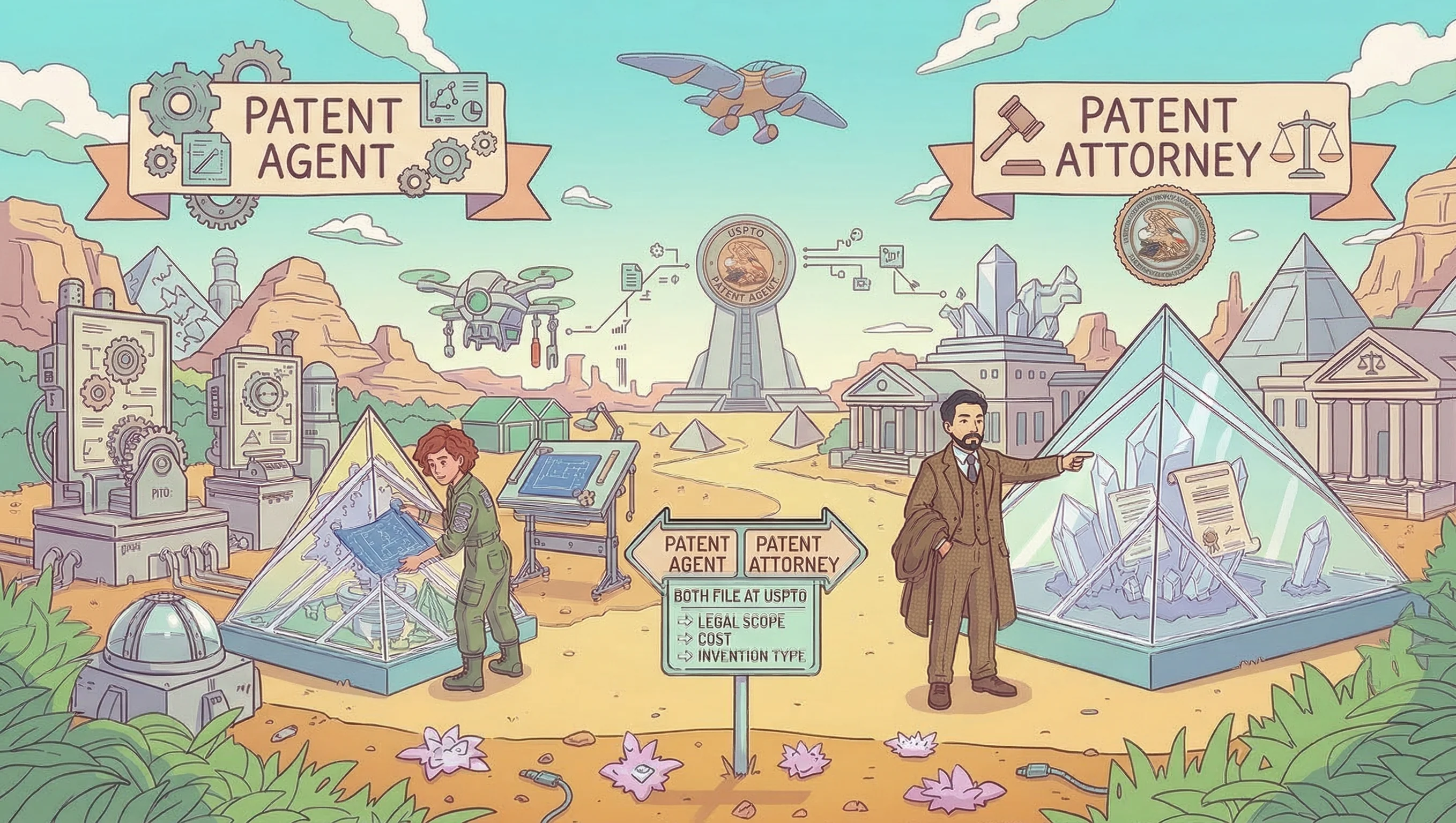
Patent Attorney vs. Patent Agent
A patent agent can do everything a patent attorney can at the USPTO: file applications, respond to office actions, and prosecute patents. The difference is that patent agents cannot provide legal advice outside of patent prosecution. They cannot advise on licensing, litigation, infringement, or broader IP strategy.
For most inventors filing a straightforward patent, a patent agent is a perfectly good choice and usually costs 15-30% less than an attorney. If you anticipate licensing negotiations, infringement concerns, or complex IP strategy, hire an attorney.
How to Evaluate Pricing
Based on our data from 2,999 patent professionals:
| Service | Typical Range | What to Watch |
|---|---|---|
| Provisional patent | $2,000 - $6,000 | Should include 1 round of review |
| Utility patent (non-provisional) | $5,000 - $15,000+ | Ask if office actions are included |
| Design patent | $1,500 - $5,000 | Simpler than utility, shorter timeline |
| Patent search | $500 - $1,500 | Optional but recommended before filing |
The two most common fee structures:
Flat fee. About 60% of patent attorneys offer flat fees for the drafting and filing phase. You pay a set amount and know the cost upfront. This is usually the better deal for straightforward inventions. Ask whether the flat fee includes one office action response (some do, many do not).
Hourly. Rates range from $200 to $600/hour depending on location and experience. Hourly billing makes sense for complex inventions where the scope of work is hard to predict. The risk is that costs can exceed estimates. Always ask for a cost cap or range estimate before starting.
Read the flat fee vs. hourly comparison for a deeper breakdown.
Patent costs vary significantly by state. Since patent attorneys are federally licensed, hiring in a lower-cost market can save 30-50% on fees.
Red Flags to Watch For
No detailed engagement letter. A professional attorney provides a written scope of work, fee schedule, and timeline before starting. If they want to start work without a clear agreement, walk away.
Guaranteed results. No one can guarantee a patent will be granted. The USPTO examiner makes that call. An attorney who guarantees approval is either lying or does not understand the process.
Rush to file without a search. A good attorney wants to know what prior art exists before drafting claims. Filing without a patent search risks wasting money on an application that covers already-patented territory.
No questions about your invention. If the attorney does not ask detailed technical questions during the consultation, they are not going to write strong claims. The best patent attorneys interrogate your invention like an examiner would.
Extremely low prices. An attorney offering a utility patent for $2,000 is either cutting corners or planning to bill heavily for office action responses. Good patent work takes time. The national average exists for a reason.
The Consultation
Most patent attorneys offer a free initial consultation. Use it to evaluate three things:
-
Do they understand your invention? After you explain it, can they identify the novel aspects and potential claim strategies? If they seem lost, find someone with relevant technical experience.
-
Are they clear about fees? You should leave the consultation knowing exactly what the engagement will cost, what is included, and what triggers additional charges.
-
Do they communicate well? Patent prosecution involves back-and-forth between you, the attorney, and the USPTO examiner. You need someone who responds promptly and explains things in plain language.
Where to Find Patent Attorneys
The MadePatents attorney directory lists 2,999 patent professionals across all 50 states with pricing data, Google and Avvo reviews, specialties, and contact information. You can filter by state, city, specialty, and fee structure.
Other resources:
- USPTO roster: The official list of registered patent practitioners at oedci.uspto.gov
- State bar associations: Verify law licenses and check disciplinary records
- Professional referrals: Ask other inventors, startup founders, or tech transfer offices
Get quotes from at least 3 attorneys before deciding. Compare their technical background, fee structure, and communication style. The right attorney for your patent is someone who understands your technology, charges fairly, and communicates clearly.
For a full breakdown of what the process looks like after you hire, see the patent filing checklist.