You can patent a clothing design, but only its ornamental appearance. A design patent covers the specific visual look of a garment, shoe, handbag, or accessory. It does not cover a general style, a trend, or the way a piece of clothing functions. Most fashion brands never file a single patent. The ones that do are protecting hero products they plan to sell for years.
A design patent for a fashion item typically costs $1,500 to $4,000 total. That includes attorney fees, professional drawings, and all USPTO government fees. No maintenance fees after grant. Protection lasts 15 years from the date the patent is issued.
But before you file anything, you need to understand why patents are often the wrong tool for fashion. And what works better.
What Can Be Patented in Fashion
Design patents protect ornamental appearance. In fashion, that means the visual look of a physical product. Here is what qualifies:
- Distinctive shoe designs. Nike, Adidas, and Christian Louboutin all hold design patents on specific shoe silhouettes and structures.
- Handbag and accessory shapes. The unique configuration of a bag, clasp arrangement, or hardware layout.
- Jewelry designs. Rings, necklaces, bracelets, and earrings with novel ornamental features.
- Original fabric patterns. Textile weave structures or surface ornamentation applied to clothing, as long as the pattern is decorative rather than functional.
- Garment silhouettes. A truly distinctive structural shape for a dress, jacket, or other piece of clothing.
The key word is “ornamental.” If the feature serves a function (a pocket that holds things, a zipper that closes a jacket, a seam that holds fabric together), it cannot be covered by a design patent. Functional innovations in clothing need a utility patent, which costs $10,000 to $18,000 and takes two to three years. See our full patent cost guide for those numbers.
What Cannot Be Patented
Some things in fashion simply fall outside patent protection:
- General styles or trends. You cannot patent “oversized blazers” or “high-waisted jeans.”
- Color alone. Design patent drawings are typically black and white. A single color applied to a product is not patentable (though it may qualify for trade dress protection).
- Purely functional shapes. If the shape exists because the product has to work a certain way, it is not ornamental.
- Obvious variations. Making a known design slightly bigger, smaller, or in a different proportion will not pass the novelty test.
This is where the line between patents, copyrights, and trademarks matters most. Each protects something different. Getting the wrong one wastes money and leaves you exposed.
Fashion Design Patent Costs
Here is what you can expect to pay by product type:
| Fashion Item | Patent Type | Typical Cost Range |
|---|---|---|
| Shoe design | Design patent | $2,000 to $4,000 |
| Handbag or accessory | Design patent | $2,000 to $3,500 |
| Jewelry design | Design patent | $1,500 to $3,000 |
| Novel fabric or material | Utility patent | $10,000 to $18,000 |
| Novel garment construction | Utility patent | $8,000 to $15,000 |
| Clothing surface pattern | Copyright registration | $45 to $65 |
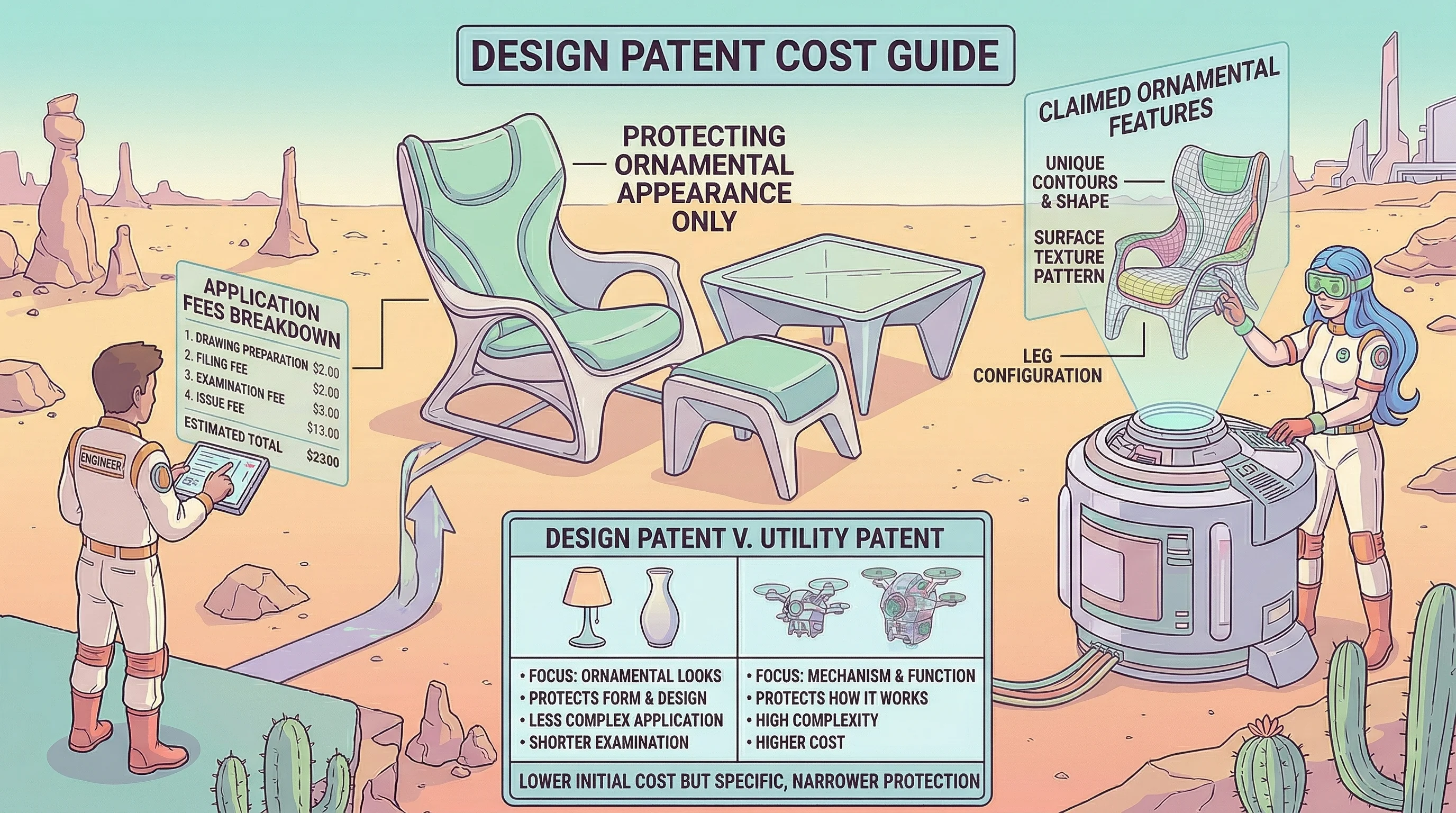
Design patents are straightforward. The application is mostly drawings, a brief description, and a single claim. Attorney fees run $870 to $1,500. Professional patent drawings cost $300 to $600. USPTO fees depend on your entity size but typically run $450 to $1,800 total through grant.
For a full breakdown of design patent costs by entity size, see our design patent cost guide.
Why Most Fashion Brands Skip Patents
Fashion moves fast. Patents do not.
A typical fashion brand runs design cycles of 6 to 12 months. A design goes from sketch to production to retail shelf in under a year. Knockoffs appear within weeks of a product launch. By the time a competitor copies your design, the original is already being marked down.
Design patents take 12 to 18 months to grant. Utility patents take 24 to 36 months. By the time either one issues, the trend has moved on and the knockoff artist has moved on with it.
Then there is enforcement. Filing a patent infringement lawsuit costs $100,000 to $500,000 or more. For a seasonal clothing item generating modest revenue, the math simply does not work. You will spend more on lawyers than you will ever recover in damages.
This is why the biggest fashion houses rely on speed, brand power, and trademark protection rather than patents. They accept that knockoffs are inevitable and focus on staying ahead of them.
Better Alternatives for Most Fashion Brands
Three IP tools tend to work better than patents for fashion:
Copyright
Copyright automatically protects original graphic prints, surface designs, embroidery patterns, and artwork applied to clothing. You do not need to register to have protection, but registering with the Copyright Office ($45 to $65) lets you sue for infringement and collect statutory damages.
Copyright does not protect the cut, shape, or silhouette of a garment. Under U.S. law, clothing shapes are considered “useful articles” and fall outside copyright. Only the separable artistic elements qualify.
Trademark and Trade Dress
Trademarks protect brand names, logos, and symbols. Trade dress protects the overall distinctive appearance of a product or its packaging.
The most famous fashion trade dress case involves Christian Louboutin’s red lacquered sole. The Second Circuit upheld this protection in 2012, finding the red sole had acquired distinctiveness as a brand identifier. That single color, applied to the sole of a shoe, now functions as a trademark.
Trade dress is powerful for fashion because it lasts indefinitely (as long as you keep using it in commerce), does not expire like a patent, and protects the overall commercial impression rather than a single specific design. Building trade dress takes time and consistent use. But once established, it is stronger than any patent.
Speed to Market
The most common “protection” in fashion is simply being first. Fast iteration, strong branding, and loyal customers do more to protect revenue than any IP filing. By the time a competitor copies your current collection, you have already shipped the next one.
When a Design Patent Actually Makes Sense
Despite everything above, there are real scenarios where a fashion design patent pays for itself:
Hero Products with Long Shelf Lives
Some fashion items are not trend-driven. A signature shoe that sells for a decade. An iconic handbag that becomes synonymous with a brand. A distinctive watch case or jewelry piece. These products generate revenue long enough for a design patent to matter. The 15-year protection term actually overlaps with the product’s commercial life.
Amazon and E-Commerce Sellers
Design patents have become essential for Amazon sellers. Amazon’s Brand Registry program gives design patent holders powerful enforcement tools. If someone copies your product design, you can file a complaint and have the infringing listing removed within days. No lawsuit required.
For small brands selling physical products on Amazon, a $2,000 to $4,000 design patent investment can prevent thousands of dollars in lost sales to copycat listings. The Amazon enforcement path alone makes the economics work.
Licensing and Investment
If you plan to license your design to manufacturers or raise investment, a design patent adds concrete value. It gives you a transferable legal right. Investors and licensees take IP portfolios seriously. A granted design patent signals that your design is genuinely novel and that you have taken steps to protect it.
Filing Before the Clock Runs Out
One critical timing rule: you must file a design patent application within 12 months of first public disclosure of the design. If you show the design at a trade show, post it on social media, or offer it for sale, the 12-month clock starts. Miss it and your right to patent is gone permanently. If you have a design that might be worth protecting, file early.
Building a Fashion IP Strategy
The strongest fashion brands do not pick one tool. They layer multiple protections:
- Trademark the brand name and logo. This is the foundation. It lasts indefinitely and costs $250 to $750 per class to register.
- Register copyrights on original graphic prints and surface designs. Cheap ($45 to $65) and automatic, but registration unlocks enforcement.
- File design patents selectively on hero products and signature designs that will be sold for years. Budget $1,500 to $4,000 per design.
- Build trade dress through consistent, distinctive product presentation over time. No filing required, but document everything.
- Move fast. Ship new designs before competitors can copy the old ones.
This layered approach gives you broad protection without wasting money on patents that expire before they pay for themselves.
The Bottom Line
You can patent a clothing design, but only its ornamental appearance, and only if it is truly novel. Most fashion items are not worth the $1,500 to $4,000 investment because design cycles move faster than the patent office.
The exceptions are real: hero products, Amazon sellers, and brands building long-term licensing value. For those situations, a design patent is one of the cheapest and most effective IP tools available.
If you are deciding whether a design patent makes sense for your product, talk to a patent attorney who understands fashion IP. Browse our patent attorney directory to find one, or use our patent cost calculator to estimate your total filing costs.
.webp)