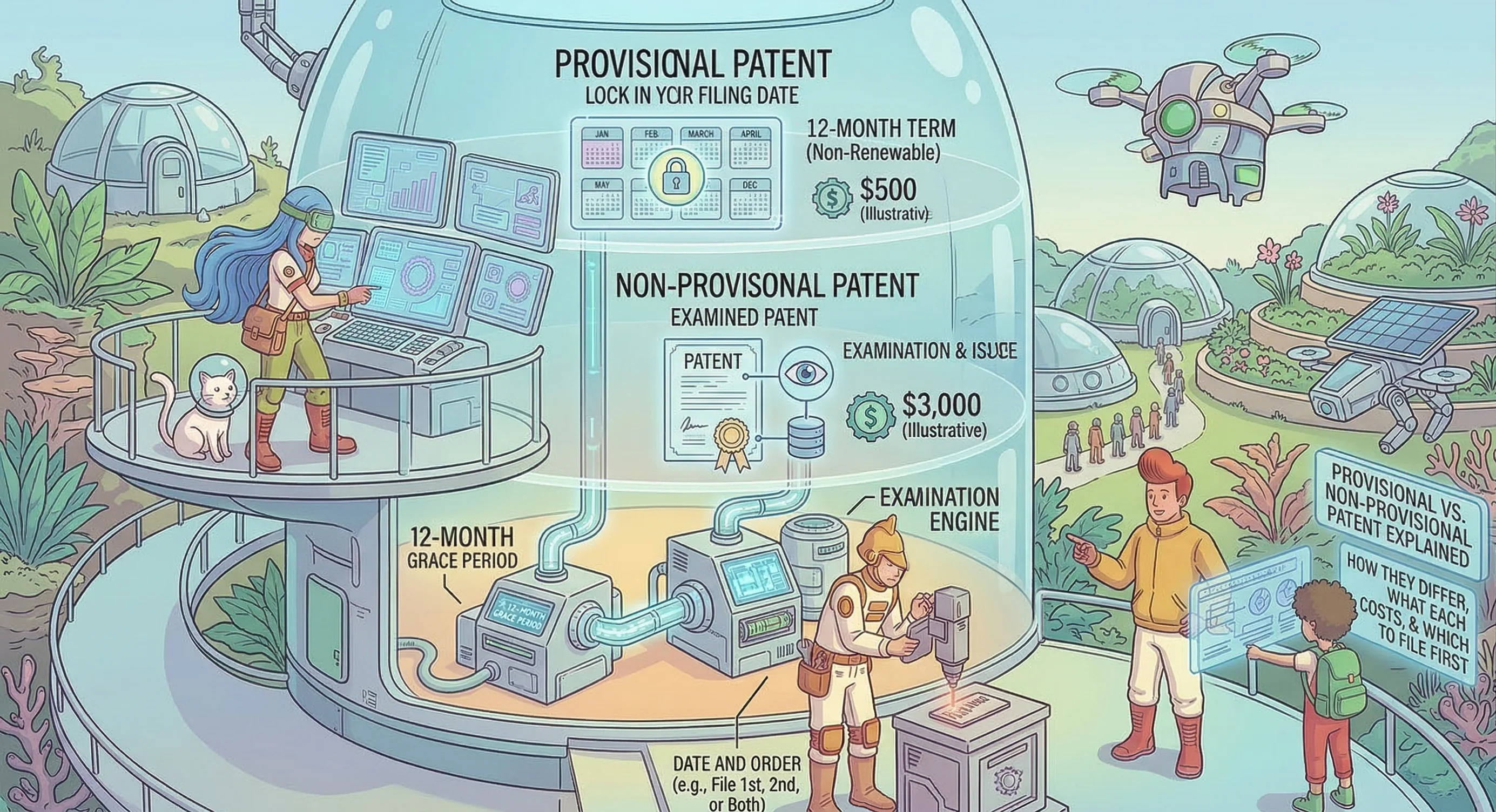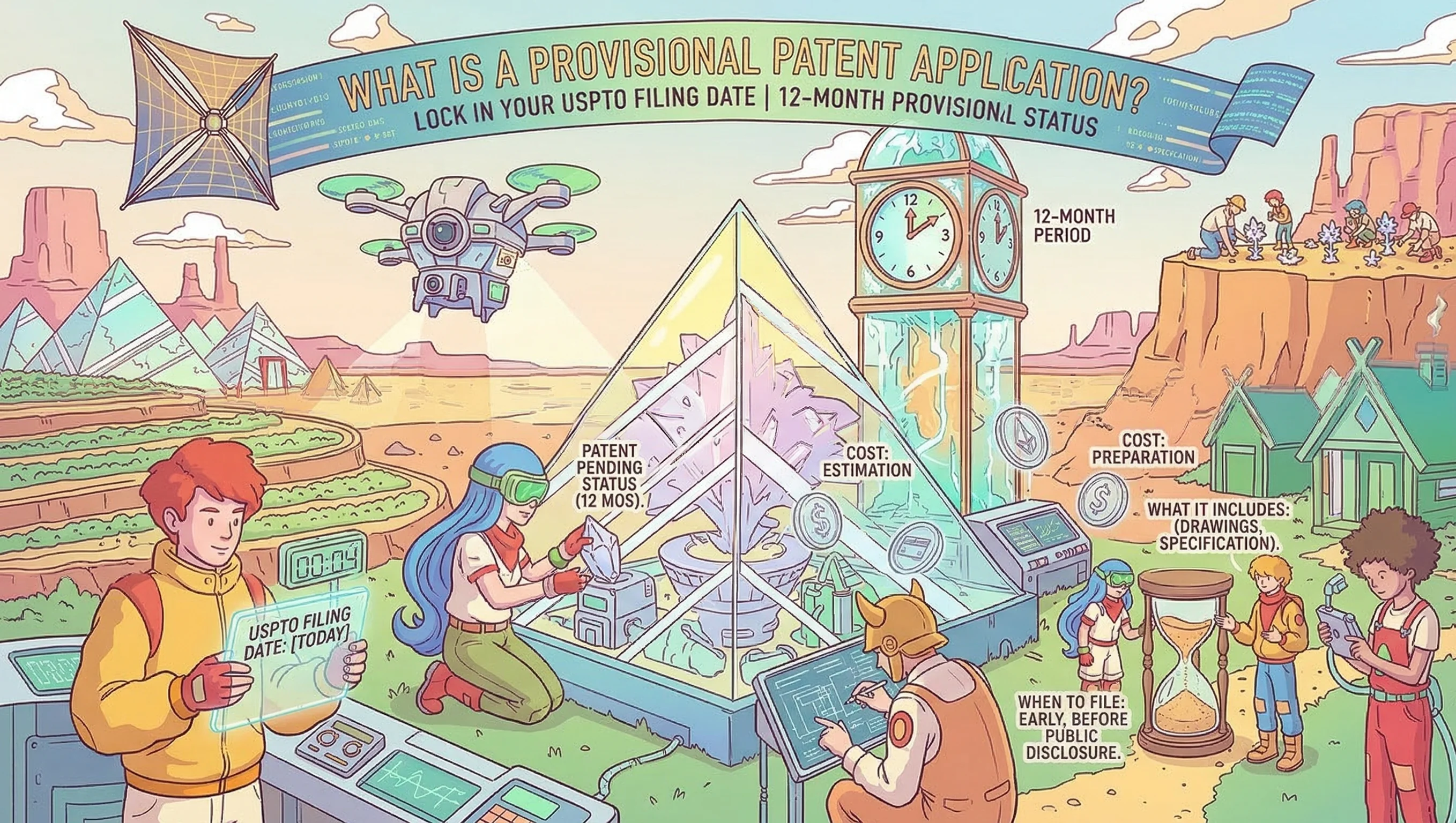
Filing a provisional patent application costs $2,000 to $6,000 with an attorney and gives you patent pending status within days. That status lasts 12 months, during which you can sell your product, pitch investors, and test the market while your filing date is locked in.
Patent pending is the most misunderstood concept in patent law. People assume it means their invention is protected. It does not. Patent pending means one thing: an application is on file with the USPTO. No more, no less. You cannot enforce anything based on a pending application. But what it does do is establish your priority date and send a clear signal to competitors.
What Patent Pending Actually Means
When the USPTO receives your patent application, they assign a filing date and send you a receipt. From that moment, your invention is “patent pending.” This applies whether you filed a provisional patent application or a non-provisional application.
The filing date matters because patent rights in the United States go to the first person to file, not the first to invent. If someone else files an application for a similar invention after your filing date, your earlier date gives you priority.
Patent pending does not mean:
- Your patent has been approved
- You can stop others from copying your invention
- Your invention is “protected” in any enforceable sense
- The USPTO has reviewed your claims
Patent pending does mean:
- You have a filing date on record with the USPTO
- You have priority over later filers
- Competitors are on notice that a patent may issue
- Once granted, damages may reach back to the publication date
How Long Patent Pending Lasts
The timeline depends on which type of application you filed.
Provisional patent application: Patent pending lasts exactly 12 months from your filing date. The provisional cannot be renewed or extended. Before it expires, you must file a non-provisional application to maintain your filing date and patent pending status.
Non-provisional patent application: Patent pending continues from filing until the patent is granted or the application is abandoned. The typical timeline is 18 to 36 months. If you use Track One prioritized examination, the USPTO targets a decision within 12 months.
During the entire period your application is pending, you can mark your product as patent pending.
The Deterrent Effect
The real power of patent pending is psychological, not legal. Competitors who see “patent pending” on your product know three things: you filed before they did, you may get a patent, and if you do, you might be able to collect damages from the date your application was published.
Smart competitors will think twice before investing in a knockoff product when a patent might issue at any time. This is especially true in industries where patent litigation is common and damages are significant.
For startups raising money, patent pending status is nearly as valuable as a granted patent during the fundraising phase. Investors want to see that you have filed. The patent strategy for startups guide covers this in detail.
Getting Patent Pending: Your Two Options
Option 1: Provisional Patent Application (Recommended First Step)
A provisional costs $2,000 to $6,000 with a patent attorney, based on our survey of 200+ patent professionals. The USPTO filing fee is $80 for micro entities or $160 for small entities.
Advantages:
- Cheapest path to patent pending
- Filed in 2-4 weeks
- Buys 12 months to test the market
- Lower upfront cost than a non-provisional
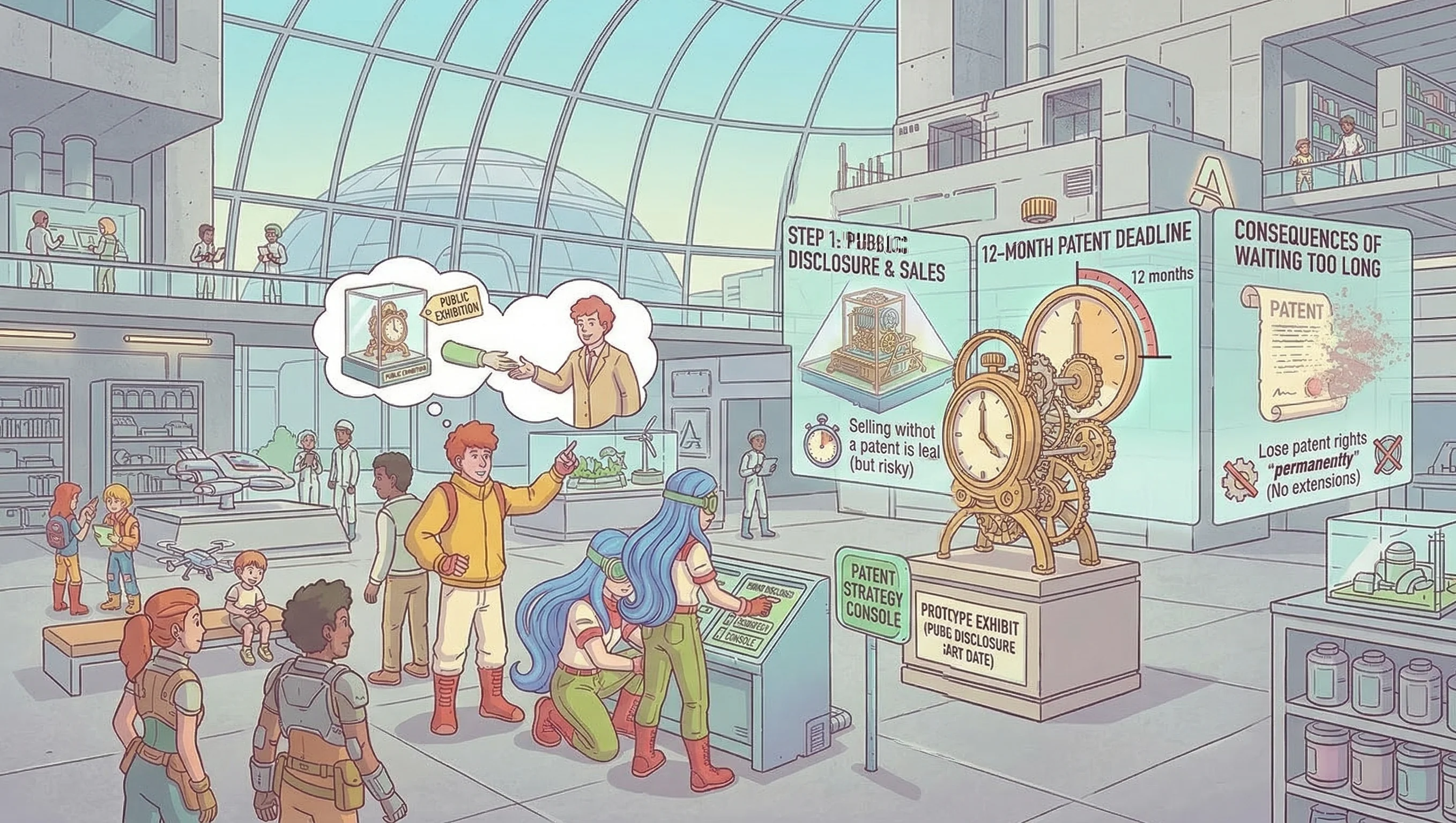
Limitation: It expires after 12 months. You must file a non-provisional before then or lose the filing date.
See the full provisional patent cost breakdown for detailed pricing.
Option 2: Non-Provisional Patent Application
A non-provisional costs $5,000 to $15,000+ with an attorney. The USPTO filing fee is $320 for small entities. This starts the examination process immediately.
If you already know your invention is viable and you want to start the clock on getting a granted patent, skipping the provisional and filing a non-provisional directly can save 12 months of total timeline. The patent filing checklist walks through every step.
Marking Your Product
Once you have a filed application, you can mark your product with:
- “Patent Pending”
- “Pat. Pend.”
- A virtual marking notice on your website linking to your application number
You are not required to mark your product, but it is strongly recommended. Marking puts competitors on constructive notice. Without marking, you may not be able to collect damages from infringers who did not know about your patent application.
Do not use patent pending marking without a filed application. False marking carries a fine of up to $500 per offense under 35 U.S.C. 292.
What Happens When the Patent Grants
Once the USPTO grants your patent, patent pending status ends and your enforceable rights begin. You can now:
- Sue infringers for damages
- Send cease-and-desist letters
- License the patent to others
- Potentially collect damages back to the application’s publication date (18 months after non-provisional filing)
Replace “patent pending” on your product with the patent number. You must do this within a reasonable time to maintain your right to damages from infringers.
For a walkthrough of the full process from filing to grant, see what happens after you file a patent application.
When Patent Pending Is Not Enough
Patent pending works well for deterrence during your first 1-3 years. But some situations demand faster action:
- Active copying: If a competitor is already copying your product, patent pending alone will not stop them. Consider Trade One examination for faster grant, or evaluate whether a design patent (which grants in 12-18 months) can protect the visual aspects.
- Licensing negotiations: Some licensees want to see a granted patent before signing. Others accept patent pending. Know your negotiating position.
- Sale or acquisition: Buyers strongly prefer granted patents. A portfolio of only pending applications is harder to value.
For more on monetization timing, see how to monetize your patent.