These are the 37 patent questions we hear most often, answered with specific data from our directory of 2,999 patent professionals across all 50 states. Each answer includes the key facts. For the full picture, follow the link to the dedicated guide.
Cost Questions
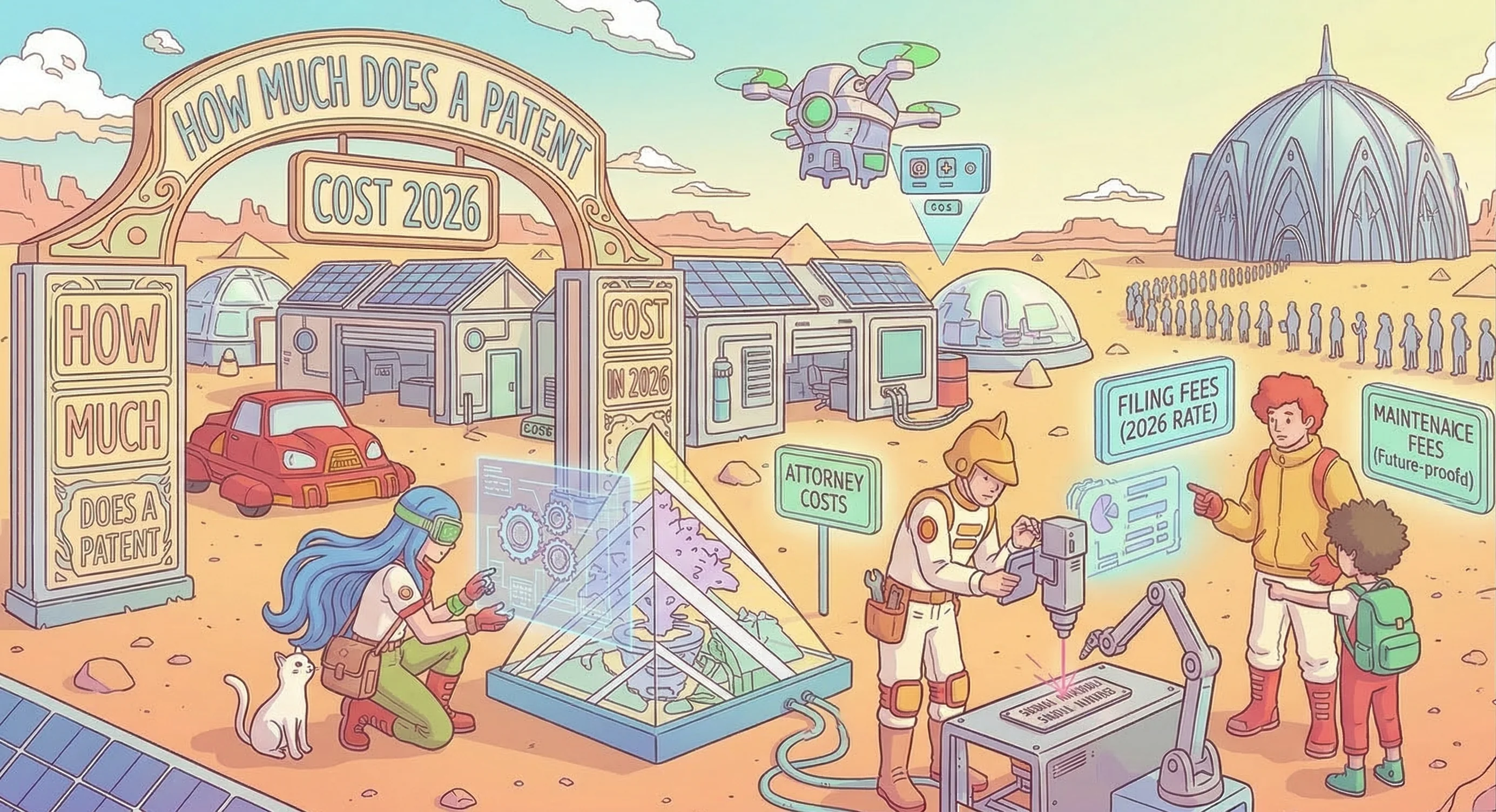
How much does a patent cost?
A utility patent costs $5,000 to $15,000 for filing, plus $1,000 to $5,000 per office action response, plus maintenance fees after grant. Total through grant: $10,000 to $30,000 spread over 2 to 4 years. The biggest variable is invention complexity. Simple mechanical devices sit at the low end. Software and biotech patents sit at the high end.
Full guide: How Much Does a Patent Cost in 2026?
How much does a provisional patent cost?
The average cost is $4,035 based on our 2026 survey of patent attorneys across all 50 states. Most inventors pay $2,500 to $5,000. You can file a disclosure provisional (where you write the description yourself) for $500 to $1,500. The USPTO filing fee is $80 for micro entities.
Full guide: How Much Does a Provisional Patent Cost in 2026?
How much does a patent attorney cost?
Patent attorneys charge $5,000 to $15,000 for a utility patent application. Hourly rates range from $300 to $600/hr. Patent agents (who do the same filing and prosecution work) charge 15 to 30% less. Rates vary significantly by region. A skilled attorney in the Midwest may charge half what a San Francisco attorney charges for the same quality work.
Full guide: How Much Does a Patent Attorney Cost in 2026?
Can I file a patent for free?
The USPTO filing fee for a micro entity provisional is $80. You can write and file it yourself. But “free” is misleading because a poorly drafted provisional may not support the claims you need later. The real minimum investment for meaningful protection is roughly $2,000 to $6,000 for a professional provisional, or $80 to $500 if you do the writing yourself.
Full guide: How to Patent an Idea With No Money in 2026
What are patent maintenance fees?
After your patent is granted, the USPTO requires three payments to keep it active: at 3.5, 7.5, and 11.5 years. Total maintenance cost over the patent’s life: $3,365 for micro entities, $13,460 for large entities. Miss a payment and the patent expires. Design patents have no maintenance fees.
Full guide: Patent Maintenance & Renewal Fees in 2026
How much does a design patent cost?
A design patent costs $1,500 to $3,000 in attorney fees and protects how a product looks, not how it works. Design patents are faster to obtain (12 to 18 months typical), have no maintenance fees, and face fewer office actions than utility patents. They are the cheapest form of patent protection.
Full guide: How Much Does a Design Patent Cost in 2026?
How much does a software patent cost?
Software patents cost $8,000 to $15,000+ for the non-provisional application. Total through grant runs $15,000 to $30,000+ because software patents face extra scrutiny under the Alice test (35 U.S.C. 101). The key challenge is framing your software as a specific technical solution, not an abstract idea.
Full guide: How to Patent Software & Apps
How much does a patent cost for a small business?
Small businesses save 50% on all USPTO fees. Micro entities (under $242,692 gross income, fewer than 4 prior patents) save 75%. A micro entity pays $80 to file a provisional vs. $320 for a large entity. Attorney fees are the same regardless of entity size, but total savings through grant can reach $5,000 to $10,000.
Full guide: How Much Does a Patent Cost for a Small Business in 2026?
Why do patent costs vary so much?
Patent costs depend on the type of invention, who you hire, and how many rounds of examination your application goes through. Mechanical devices and consumer products are generally on the lower end because they can be described with clear drawings and straightforward claims. Pharmaceutical formulations, biotech processes, and software systems cost more because the specifications are longer, the prior art analysis is deeper, and the claims require more careful layering. Geography plays a role too. Patent attorneys in New York or San Francisco bill at higher rates than practitioners in other parts of the country.
Full guide: How Much Does a Patent Attorney Cost in 2026?
Process Questions
How long does it take to get a patent?
A provisional takes 2 to 4 weeks to prepare and file. A non-provisional takes 18 to 36 months from filing to grant. The biggest variable is examination backlog at the USPTO. Track One prioritized examination cuts the timeline to 6 to 12 months for an extra $1,000 to $4,000 in fees.
Full guide: How Long Does It Take to Get a Patent in 2026?
What happens after I file a patent?
After filing a non-provisional, the USPTO assigns an examiner. First office action arrives 18 to 24 months after filing. You respond, the examiner reviews again, and this back-and-forth continues for 1 to 3 rounds. About 86% of applications receive at least one office action. After all issues are resolved, the patent is granted.
Full guide: What Happens After You File a Patent Application
What is a patent office action?
An office action is the USPTO examiner’s written explanation of why your claims cannot be allowed in their current form. It is not a final rejection. It is the start of a negotiation. Responding costs $1,000 to $5,000 per round. Most applications go through 1 to 3 rounds before the patent is granted.
Full guide: Patent Office Actions & Rejections
What is patent pending?
Patent pending means you have filed a patent application with the USPTO. It gives you no enforceable rights on its own, but it serves as notice and establishes your priority date. You get patent pending status the day you file a provisional or non-provisional. It lasts until the patent is granted or the application is abandoned.
Full guide: Patent Pending: What It Means and How to Get It
Do I need a patent search?
A patent search costs $500 to $3,500 and reveals whether someone already patented your core concept. It can save you the $3,000+ you would spend on a filing that has no chance of being granted. Not legally required, but it is the single most cost-effective step before filing.
Full guide: How to Do a Patent Search
What documents do I need to file a patent?
A non-provisional requires a written specification, formal claims, an abstract, patent drawings, and an inventor declaration. A provisional requires only a description and drawings. The specification is the foundation. Every claim must be supported by the written description, so thoroughness here determines the strength of your entire patent.
Full guide: Patent Filing Checklist (2026)
Requirements Questions
What is a patent?
A patent is an exclusive right granted by the USPTO that gives an inventor legal ownership over their invention for a limited period. In exchange for that protection, the inventor must publicly disclose how the invention works. A utility patent lasts 20 years from the filing date. A design patent lasts 15 years from the grant date. Once granted, a patent gives you the right to prevent anyone else from making, using, selling, or importing your invention without permission.
Full guide: Patent Glossary
What can be patented?
You can patent any new and useful invention, including physical products, machines, tools, chemical formulas, manufacturing processes, and in some cases software-driven devices. To qualify, your invention must be novel, non-obvious, and useful. In practical terms, this means it cannot already exist, it cannot be a trivial variation of something that does, and it must serve a real purpose. Utility patents protect how something works. Design patents protect how something looks.
Full guide: The 3 Requirements for Patentability
What rights does a patent provide?
A patent gives you the exclusive right to control who can make, use, sell, distribute, or import your invention. If someone uses your patented invention without permission, you have the legal right to stop them. Without a patent, anyone can copy your product the moment they see it on the market. With one, you decide who gets to use it and on what terms. That exclusivity is what allows you to charge premium prices, negotiate licensing deals, and build a defensible business.
Full guide: How to Monetize Your Patent
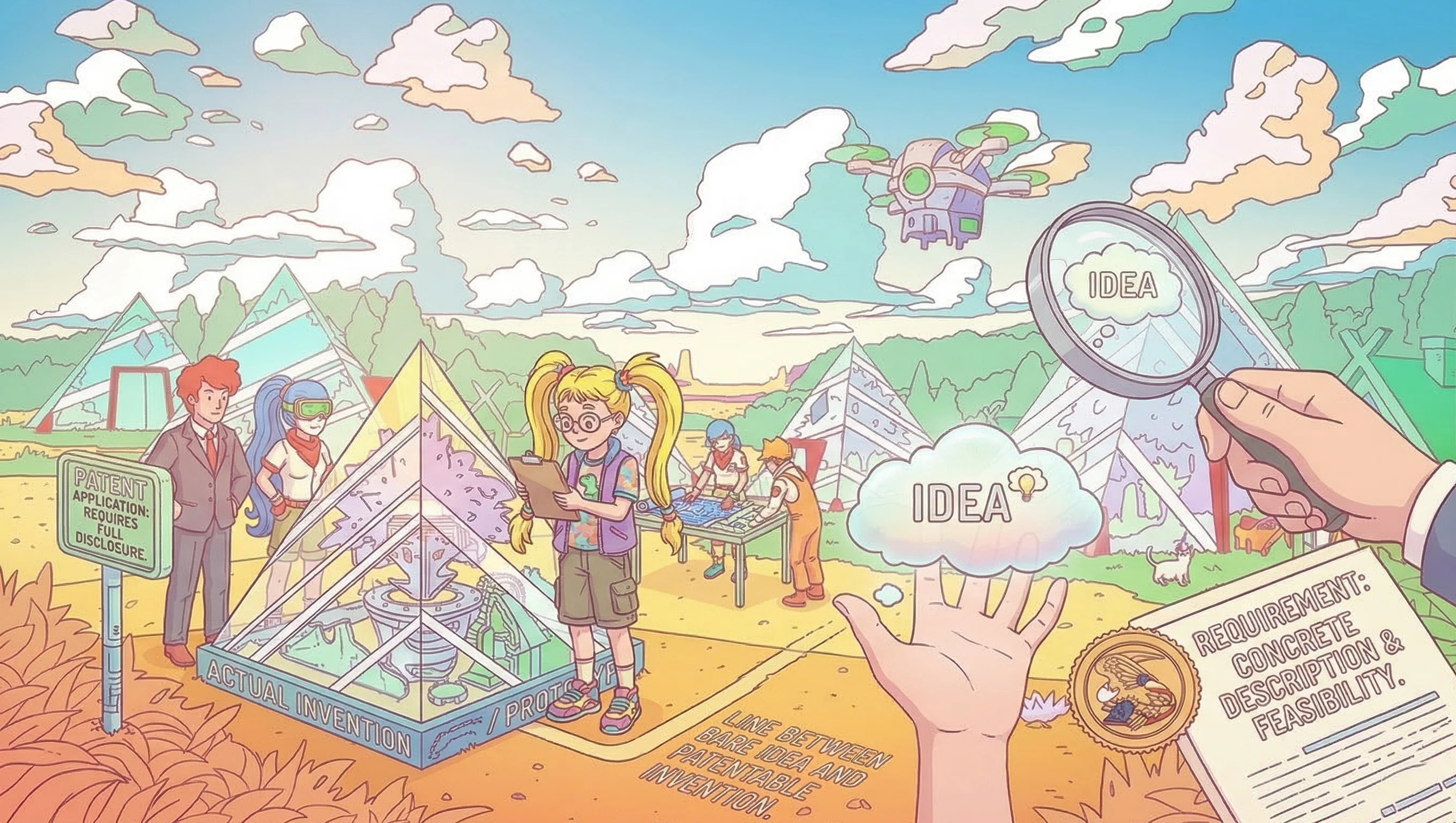
Can I patent an idea?
You can patent an invention you have not built yet. But you cannot patent a bare concept like “a device that cleans floors.” You need a specific implementation: how it works, what components it uses, how those components interact. The more concrete your description, the stronger your claims.
Full guide: Can I Patent an Idea?
What are the three requirements for a patent?
Every patent must satisfy novelty (your invention is new), non-obviousness (it is not an obvious combination of existing ideas), and utility (it does something useful). Novelty and non-obviousness are where most applications get challenged during examination. A patent search helps assess both before you file.
Full guide: The 3 Requirements for Patentability
What does non-obvious mean?
Non-obviousness is the hardest requirement to satisfy. Your invention must not be an obvious combination of things that already exist. The standard comes from the KSR v. Teleflex Supreme Court decision. An examiner can combine multiple pieces of prior art and argue that the combination would have been obvious to someone skilled in the field.
Full guide: What Does Non-Obvious Actually Mean?
Can I patent software or an app?
Software is patentable if it passes the Alice test: it must claim a specific technical improvement, not an abstract idea implemented on a computer. A food delivery app with a standard interface is not patentable. One with a novel routing algorithm that reduces delivery times may be. Claims need to be framed around the technical solution, not the business concept.
Full guide: How to Patent Software & Apps
Is my invention too simple to patent?
Simplicity does not disqualify an invention. Some of the most valuable patents protect simple mechanisms. The question is whether your invention is novel and non-obvious, not whether it is complex. A simple hinge design that solves a problem no existing hinge solves is patentable.
Full guide: Is My Invention Too Simple for a Patent?
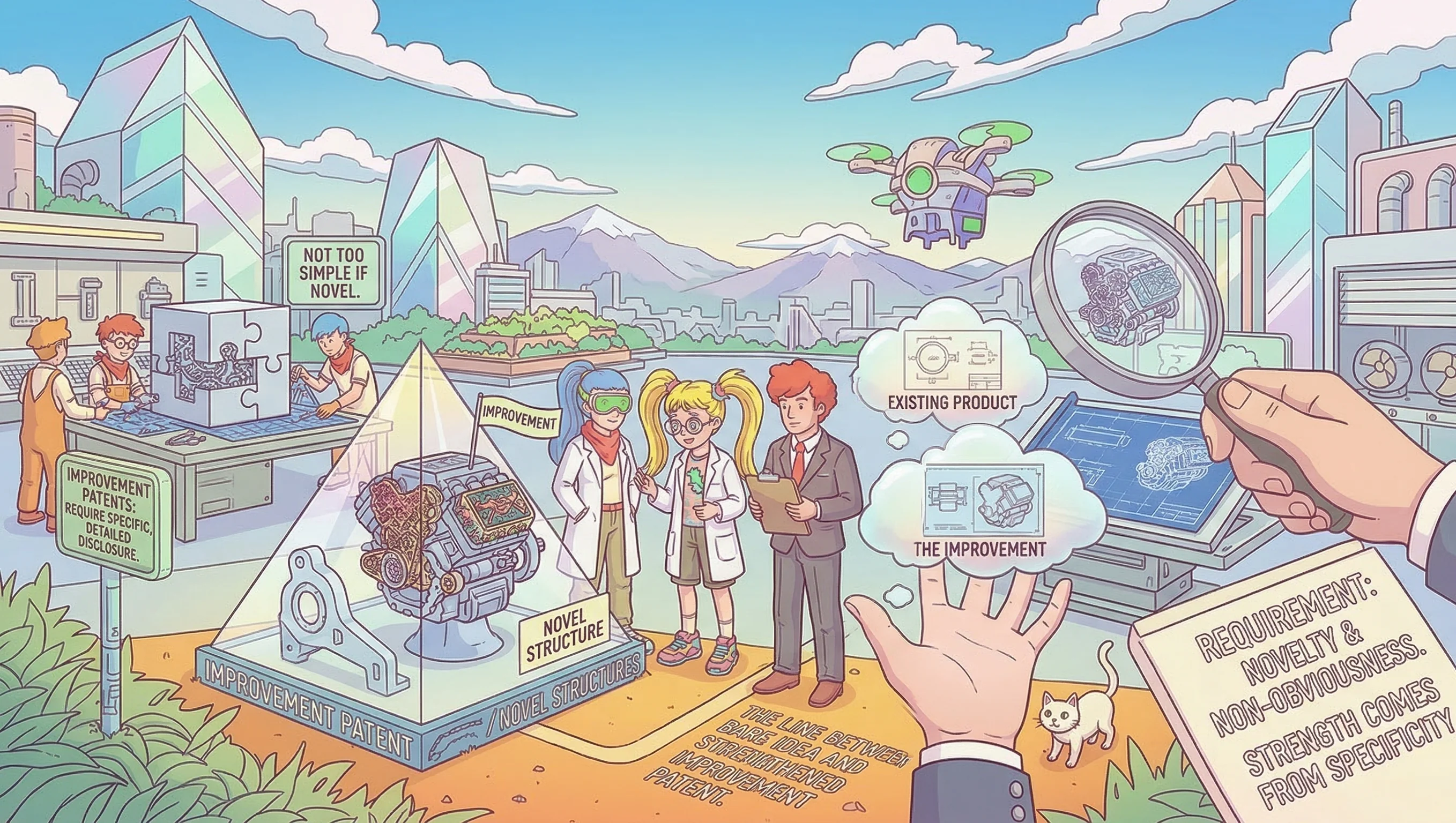
Can I patent an improvement to an existing product?
Over 80% of patents are improvements. You do not need to invent something entirely new. If your modification is novel (no one has done it before) and non-obvious (it is not a trivial change), it qualifies. The improvement gets its own patent. The original product’s patent holder does not need to give permission.
Full guide: Can You Patent an Improvement?
What is the detailed description section of a patent?
The detailed description is the section of your patent application where you explain exactly how your invention works. It covers the structure, function, materials, and any variations of your invention in enough detail that someone with technical knowledge in your field could build it. The USPTO requires that the detailed description fully supports your claims, so everything you claim must be backed up by what you describe. A well-written detailed description strengthens your claims and makes your patent harder to challenge.
Full guide: How to Read a Patent
What kind of prior art can the USPTO use to reject my patent?
USPTO examiners conduct global prior art searches and can use virtually any publicly available evidence to reject your claims. This includes patents from any country going back over 100 years (even originally written in other languages), published patent applications, academic papers, product listings, trade publications, and online content. Examiners have been known to combine references from century-old foreign patents with YouTube videos to build a rejection. This is why a thorough patent search and carefully drafted claims are critical before filing.
Full guide: How to Do a Patent Search
Strategy Questions
Do I need a patent before selling?
No. You can sell without a granted patent. But you should file at least a provisional before your first sale or public disclosure. In the US, you have a 12-month grace period after public disclosure to file. Most countries have no grace period at all. Filing before selling is the safest approach.
Full guide: Do You Need a Patent Before Selling?
Should I file a provisional or non-provisional first?
File a provisional first if your invention is still in development or you want to test the market. It costs less ($2,000 to $4,000 vs. $6,000 to $15,000+) and gives you 12 months of patent pending status. Go straight to non-provisional if your product is finalized and you have the budget.
Full guide: Provisional vs. Non-Provisional Patent Explained
Do I need a patent attorney or can I file myself?
You can file yourself. But applicants who use a registered patent professional are 2.7 times more likely to get their patent granted. The cost ($2,000 to $15,000) is worth it for most inventors because weak applications generate expensive office actions and narrower claims. A bad filing costs more to fix than a good filing costs upfront.
Full guide: DIY Patent Filing vs. Hiring a Professional
Should I get broad or narrow patent claims?
Both. Broad claims cover the widest range of potential infringers but are easier to challenge. Narrow claims are harder to invalidate but cover less territory. The best applications use a cascade: broad independent claims backed by progressively narrower dependent claims. If the broad claim gets challenged, the narrow ones survive.
Full guide: Broad Claims vs. Narrow Claims
Should I get a patent or use trade secret protection?
Patents require public disclosure but give you 20 years of enforceable exclusivity. Trade secrets last forever but offer no protection if someone independently discovers or reverse-engineers your innovation. Choose patents for products competitors can reverse-engineer. Choose trade secrets for internal processes, formulas, or methods that are hard to discover.
Full guide: Patents vs. Trade Secrets
What is a cover sheet provisional and why is it risky?
A cover sheet provisional is a bare-bones provisional patent application that consists of little more than a brief summary or marketing description stapled behind a USPTO cover sheet. They cost as little as $300 to $500, which makes them tempting. But they create a dangerous false sense of security. When you file your non-provisional, every claim must be fully supported by what was described in the provisional. If the provisional was vague or incomplete, any prior art published between the two filing dates can be used against you. The original provisional effectively did nothing to protect you, and you believed you were protected the entire time.
Full guide: Provisional Patent Application
AI and Patent Drafting
Why are AI-written patents getting rejected by the USPTO?
AI-generated patent applications face rejection under multiple sections of patent law. The issues go beyond writing quality. AI-generated claims frequently contain formatting and structural errors that trigger formal objections. AI struggles with antecedent basis (the rule that every term in a claim must be properly introduced before it is referenced). AI tends to use vague or subjective language that examiners reject as indefinite under Section 112. And perhaps most importantly, AI has difficulty identifying the truly patentable aspects of an invention and claiming them in a way that distinguishes them from prior art. Inventions are by definition new. If something is truly novel, it is not something an AI model was trained on.
Full guide: AI Patent Tools in 2026
Choosing Help
How do I choose a patent attorney?
Look for technical expertise in your field, flat-fee pricing, a clear drafting process, and willingness to explain their approach. Patent agents charge 15 to 30% less than attorneys and handle filing and prosecution identically. The only difference is attorneys can also handle litigation.
Full guide: How to Choose a Patent Attorney in 2026
What is the difference between a patent agent and a patent attorney?
Both are licensed by the USPTO to draft and file patent applications. The protection you receive is identical. Patent agents typically have deeper technical backgrounds (the USPTO requires a science or engineering degree). Patent attorneys can also handle litigation and licensing negotiations. For filing and prosecution, there is no practical difference.
Full guide: Patent Agent vs. Patent Attorney
Are services like LegalZoom or InventHelp worth it?
LegalZoom connects you with an attorney from their network. You don’t choose which one. InventHelp is an invention promotion company that does not file patents at all. For most inventors, hiring a patent agent or attorney directly gives you more control over quality, cost certainty with flat-fee pricing, and direct communication with the person doing the work.
Full guides: LegalZoom Patent Review | InventHelp Review
Browse patent attorneys in the directory or estimate costs with the patent cost calculator. For state-by-state pricing comparisons, see our patent cost by state guide.